
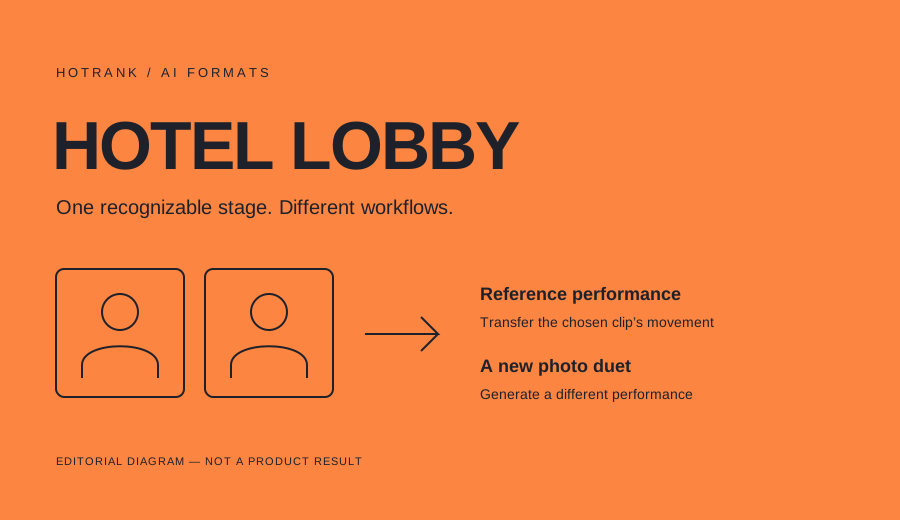
The short answer: “Hotel Lobby AI” usually describes short, AI-made videos that restage or reinterpret the look of Quavo and Takeoff’s HOTEL LOBBY (Unc & Phew) performance on A COLORS SHOW. In the recognizable version, two characters take turns performing against an orange backdrop. Some creators replace performers in a reference clip; others animate two supplied portraits into an entirely new duet. Those are different workflows, even when the result looks similar.
Where the look came from
On June 17, 2022, the COLORS YouTube channel published Quavo & Takeoff – HOTEL LOBBY | A COLORS SHOW. It is a real music performance, not an AI-generated clip. The plain, warm-colored set and the alternating performers make the scene easy to recognize when it is recreated in a new format.
Reports in 2026 describe a wave of AI-made versions on short-video platforms. The trend is commonly referred to by several overlapping names, including “Hotel Lobby AI,” “Migos AI,” and “AI rap duo.” That doesn't make every product advertised under those names the same service. Tom's Guide's report also raises questions about consent and digital likenesses; it is independent reporting, not an audit of individual generators.
What the AI changes—and what it may not
Two broad production approaches appear in current product descriptions:
| Approach | What you provide | What the result tries to do | Important limitation |
|---|---|---|---|
| Reference-performance or motion transfer | A source video or clip plus subject references | Follow the selected performance's timing and movement with different subjects | Rights in the original performance, music and faces require attention; likeness can drift |
| Two-photo generated duet | Portraits of two consenting participants, sometimes an optional theme | Create a short staged performance with newly generated movement or audio | The choreography, vocal timing and face fidelity may differ from the familiar clip |
For example, Genjutsu AI's Hotel Lobby page describes a reference-clip workflow, while AI Rap Duo's walkthrough describes a two-photo route that generates a new performance. These are each providers describing their own product; HotRank has not independently completed a paid generation on either service.
Why this trend is particularly easy to remake
The format contains a few distinctive cues: a spare orange stage, two clearly readable characters, a central performance focus, and recognizable back-and-forth gestures. Because the visual concept is compact, the same joke or duet format can be adapted for different pairs. This is an editorial explanation of the format, not a claim that search volume, view count, or commercial demand reached any particular number. We have not independently verified a global view-count total or the very first AI remake.
Before uploading your own photos
Use images you own or are permitted to upload, and get the subjects' agreement. Check whether the product creates new audio or retains a soundtrack from a reference clip. Those rights questions are not interchangeable. Also inspect the full finished video—faces, hands, mouth movement, audio and any watermark—before deciding to post it. A seller's sample clip is not a guarantee that your result will match.
How to choose a tool
If speed matters, look for a preset where two portraits and a short sequence are sufficient. If exact choreography matters, read the provider's motion-transfer instructions and consider source-clip permissions. If price matters, compare the final length, resolution, sound, credits and download requirements, not just the advertised entry price. Our Hotel Lobby AI tool comparison summarizes currently published offers without pretending that we have tested every checkout.
For the event's origin and later changes, see the Hotel Lobby AI topic tracker.
Why the consent debate has more than one side
Tom's Guide discusses concerns about copyright, permission and recreating someone who has died and cannot consent. It also reports Quavo's response to the resurgence and its connection with Takeoff's legacy. Those reactions do not establish one universal judgment about every AI remake, or grant rights to a viewer. This is the reporting's context, not a HotRank legal finding or an audit of any generator.